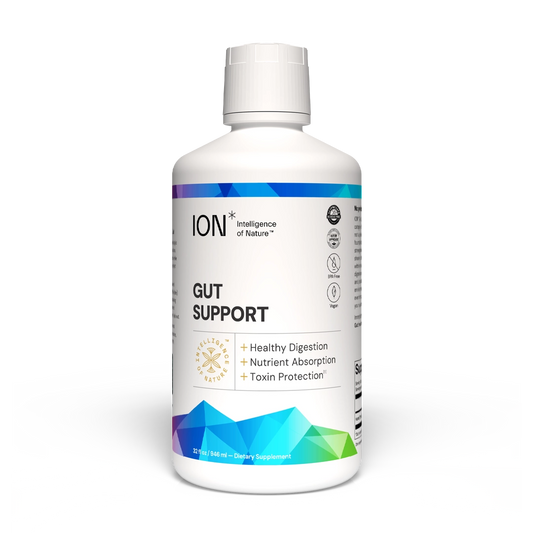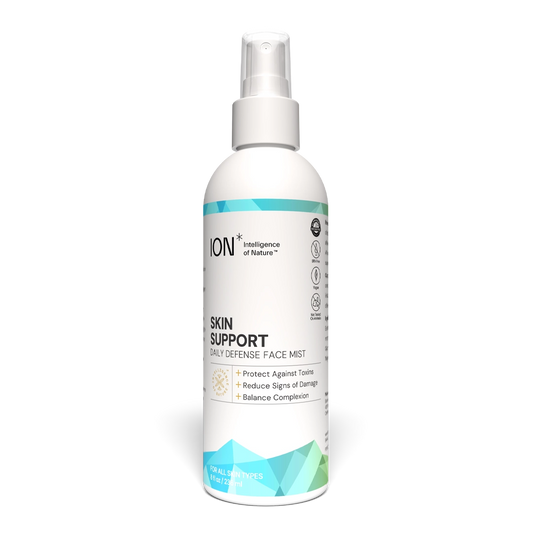


A Collaboration Worth Getting Excited About
We talk a lot about the gut barrier — the frontline of your body's relationship with the outside world. But great gut health isn't built on supplements alone. It's built on real food, living culture, and a return to the way humans have eaten for thousands of years.
That's why we're thrilled to partner with the team at Local Culture Ferments, a small-batch, plastic-free ferment company out of Grass Valley, CA making some of the most biodiverse, thoughtfully crafted sauerkrauts and kimchis on the market.
We share a powerful belief: reconnecting with real, living foods is one of the most important things you can do for your health. We'll let their co-founder, Chris Frost McKee, take it from here.
From the Fermentation Floor: Chris Frost McKee, Co-Founder of Local Culture Ferments
Hello fellow gut health lovers! My name is Chris Frost McKee, and I'm the co-founder and fermentation enthusiast behind Local Culture Ferments. I'm excited to share my take on natural fermentation and how it became the focus of my life. Let's start at the beginning.
Fermentation Has Been Around Longer Than You Think
The roots of fermentation go back thousands of years, linked to cultures, traditions, and civilizations across the globe. For most of human history, fermentation served one essential purpose: to preserve food through long winter months when fresh produce wasn't available. It enabled food to be stored for years — without refrigeration or modern food storage.
The health benefits weren't the original goal, but many civilizations noticed the connection between eating fermented foods and feeling healthier. Sailors eating sauerkraut on long ocean voyages, for example, were warding off scurvy thanks to its high vitamin C content.
While refrigeration changed everything about food preservation, fermentation never went away. The kimchi we know today traces its roots to Korea and neighboring regions of East Asia, while sauerkraut emerged from Eastern Europe and China — each born from tradition, necessity, and bold regional flavor.

Why Our Bodies Actually Crave Fermented Foods
Our palates and our bodies have learned to crave the sour or umami flavors that make up most fermented foods — kimchi, sauerkraut, pickles, yogurt, kefir, sourdough, miso, soy sauce. For me, just thinking about taking a bite of a real kosher pickle on an empty stomach makes my mouth water.
If we're truly connected to our body and our diet, we genuinely crave fermented foods for a reason — and it goes far beyond taste or preservation.
Fermented foods are full of life. Literally. They're teeming with beneficial microorganisms that are essential for supporting a healthy microbiome. It's no secret that naturally fermented foods contain some of the greatest diversity of beneficial probiotics for our gut, and sauerkraut and kimchi rank among the highest of all fermented foods. They're also rich in prebiotic fiber — fuel for the healthy microbes already living in your gut.
I'm not making medical claims here, but daily consumption of small amounts of fermented foods can meaningfully shift the health and vitality of many people. Some report improved digestion, more regular bowel movements, stronger immune response, better nutrient absorption, and even clearer thinking.
A Re-Awakening, Not a Trend
It may seem like fermented foods are a fairly new trend in the US — and in some ways, that's true. But the more we explore this space, the clearer it becomes: this is actually a re-awakening. Most of our lineages have deep connections to fermented foods. This isn't a passing food trend. It's the beginning of something more permanent — a shift back toward real food that helps address the imbalance so present in today's food system.
How Local Culture Ferments Was Born
My passion for fermented foods began long before there was a trend. In 2003, I was traveling through Mexico and Central America when I was inspired by Sandor Katz and his first book, Wild Fermentation. I rarely had refrigeration, so I started cramming jars with whatever vegetables I could find, sprinkling in salt, and making sure every meal included something fermented. I noticed an immediate difference in how I felt — and I wasn't getting sick as often as the travelers around me.
I started with sauerkrauts, kimchis, and hot sauces, then ventured into ginger beers, jun, and noni elixirs. My body craved it, and there was no going back.
Over the years, my passion kept growing — so when my sister came to me with her incredible sauerkraut idea for farmers markets, I was 100% in. In 2018, what started as a fun side hustle for my wife and me — while raising our kids and connecting with local farmers in Grass Valley — quickly became something bigger. Local Culture Ferments made its way onto the shelves of quality natural groceries up and down the West Coast, and eventually, nationwide.

What Makes Local Culture Different
We are now a flourishing ferment company with a unique variety of organic sauerkrauts, kimchi, and sauces. I wouldn't call any of them traditional, though. We took the roots of traditional fermentation and layered in years of culinary experience to make our products fun, approachable, and genuinely delicious.
A few things we take seriously at Local Culture:
Plastic-free fermentation.
We ferment exclusively in high-quality stainless steel vessels. Most brands use plastic. This matters because the beneficial lactic acid bacteria naturally present in fermented foods are highly active and responsive to their environment. Avoiding plastic during fermentation reduces the risk of unwanted chemical leaching and protects the purity of our product from start to finish.
Time.
We ferment for a minimum of 4 to 6 weeks in a strictly temperature-controlled environment, so every jar you open is as biodiverse and fresh as possible.
Closed-loop composting.
We run an on-site composting program that turns kitchen scraps into rich, biodiverse compost — which goes straight back into the soil to feed the seasonal cabbage we grow each year for our ferments.
There is real fulfillment in feeding people food that nourishes them. Food is medicine, and we all get to decide what we put in our bodies.
Make Your Own: Simple Red Beet Kraut
Looking to start experimenting? Making delicious sauerkraut is easier than you'd think. All you need is a clean wide-mouth 32oz or 64oz mason jar and a rust-proof lid. Here's one of my favorites:

Ingredients
- 700g finely chopped green cabbage (save a large outer leaf if you don’t have a fermentation weight)
- 100g grated red beet
- 16g quality salt (not iodized)
- Optional: 1 tablespoon fresh ginger for a little kick
Instructions
Add all ingredients to a large mixing bowl. With clean hands, thoroughly massage everything together for 5–10 minutes until the vegetables soften and feel wet to the touch.
Pack everything tightly into your clean jar — tight enough that the juice starts rising above the vegetables. If you have a fermentation weight, place it on top. If not, fold a large outer cabbage leaf to fit snugly over the vegetables. Leave an inch or two of headspace for expansion.
Place your rust-proof lid on top, tighten — but not too tight, so the ferment can off-gas. Set the jar in a bowl to catch any overflow and find a dark, warm spot in your pantry.
Ferment for 7 to 21 days. Check it periodically with a clean utensil, pressing down so the juice rises to the top. When it tastes right to you, move it to the fridge. It'll keep for many months.
If you are hesitant to start your fermentation journey just yet, you can order a variety of options directly at localcultureferments.com or find a retailer near you on their locations page!

Why ION* Believes in Fermented Foods
At ION*, we believe nature has always had the answers. Long before supplements, before labs, before modern medicine rewrote the rulebook — humans were fermenting their food, tending their soil, and eating in ways that kept them connected to the world around them. That's not nostalgia. That's wisdom we're only beginning to fully understand again.
Our work starts at the gut barrier — the microscopic gateway between the outside world and everything inside you. Supporting those tight junctions, the gates that decide what gets in and what stays out, is foundational to how we think about health. And a diverse, living microbiome is exactly the environment that barrier needs to do its job.
Fermented foods aren't a trend to latch onto. They're proof that food has always been medicine — and that when we let nature lead, the results tend to hold up across thousands of years. That's what drew us to Local Culture Ferments. A team that ferments with real integrity, refuses to cut corners, and understands that the oldest methods often turn out to be the best ones.
Protect what protects you….and eat your kraut. ;)