
We talk about “the gut” as though it is one place. Feed it more fiber. Give it good bacteria. Keep it healthy.
But follow a bite of food through your body, and that picture starts to change. The stomach, small intestine, and colon are connected, yet each does a different job. The conditions change as you move from one to the next, and so do the microbes that live there.
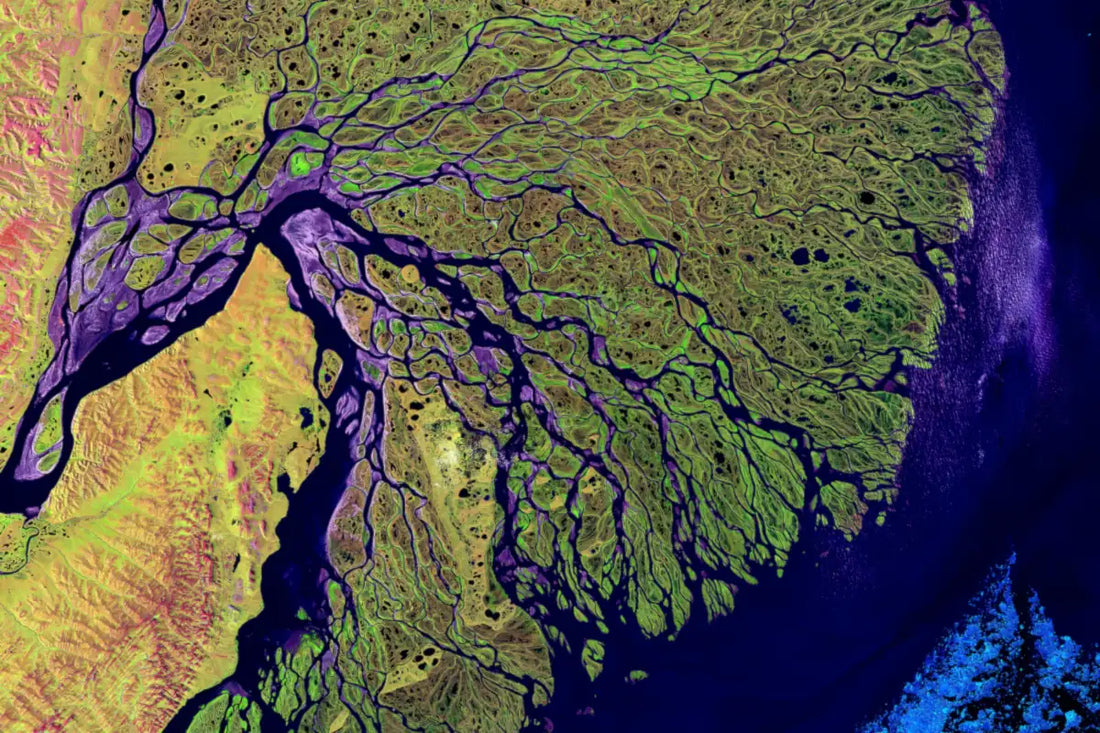
Think of a forest, a river, and a meadow. They belong to the same landscape, but you would not expect the same life to thrive in all three.
Your digestive tract has a geography, too. To understand its microbial ecosystem, we need to look at not just the what, but the where.
First stop: the stomach

Imagine you have just eaten lunch. Before your body can use that food, it needs to break it down.
Your stomach gets to work, churning the meal and mixing it with acid and digestive enzymes. That acidic environment also makes it difficult for many microbes to survive. The stomach is not bacteria-free, but it is a very different habitat from the one waiting farther along.
Already, the idea of one uniform “gut” falls apart. Conditions that suit one part of the digestive tract would not necessarily suit another.
As your meal leaves the stomach, the landscape changes again.
The small intestine: where your body takes what it needs
In the small intestine, food mixes with more digestive enzymes and bile, which helps with fat digestion. Your body breaks food into smaller pieces and absorbs most of its nutrients here.
Bacteria live in this space, too, but generally in much lower numbers than in the colon. Even within the small intestine, the microbial community changes along the way. This is not one identical neighborhood repeated from beginning to end.
Digestive fluids, available food, and movement all help shape who can live here. Different bacteria are suited to different conditions and use different sources of fuel.
That is an important shift from the usual “good bacteria versus bad bacteria” conversation. An organism's role depends partly on its surroundings. More bacteria is not automatically better in every location.
The small intestine's main job is to digest and absorb. The next neighborhood has a different assignment.
The colon: where microbes make use of what remains
By the time your meal reaches the colon, your body has already taken in many of its nutrients. Some material remains, including fibers that your own digestive enzymes could not break down.
Here, a much larger microbial community gets to work.
Some bacteria break down these leftovers through a process called fermentation. Others use substances produced by neighboring microbes. It is less like a crowd of organisms doing the same thing and more like a community sharing different jobs.
Among the products of fermentation are short-chain fatty acids. One of them, butyrate, can serve as fuel for the cells lining the colon. Gas is another normal product of this microbial activity.
Meanwhile, the colon absorbs water and helps form stool. Its slower pace gives microbes more time to work on the material that arrives.
What was left over from your lunch becomes useful material in a different part of the system. That is the value of having different environments: each supports work that the others do not.
What feeds this community? Explore foods that support gut health, including fibers your microbes help break down.

The balance depends on the place
These neighborhoods are connected, not sealed compartments. But their differences matter.
Acidity, digestive fluids, mucus, and the speed of movement help shape the conditions in each region. Together, they influence which microbes thrive and what those microbes do.
This is where motility, the muscular movement that mixes and carries food through the digestive tract, fits into the story. It helps determine how long food and microbes spend in each place. It is one part of what keeps the landscape organized, not the whole explanation for gut health.
The gut lining is part of the landscape, too. It allows nutrients and water to pass into the body while helping maintain a boundary with the contents of the intestine. Microbes do not live in an empty tube. They live alongside tissue that has its own work to do.
A closer look at the landscape: Your microbes live alongside a lining with an important job. Learn how your gut lining works.
It is a delicate balance, but that does not mean one meal or one uncomfortable day throws the whole ecosystem off course. It means that gut health depends on relationships, not simply on increasing the number of bacteria everywhere.
A different way to think about gut health

By the end of your meal's journey, “the gut” looks less like one organ with one set of needs and more like a connected landscape.
The stomach breaks food down in an acidic setting. The small intestine handles most digestion and nutrient absorption. The colon supports a much larger microbial community that makes use of what remains.
Different places. Different conditions. Different jobs.
That is also why the environment around your microbes belongs in the gut-health conversation. ION* Gut Support focuses on strengthening the gut lining rather than adding specific bacterial strains. And it is foundational for proper digestion to function.